Call Us!
 WhatsApp
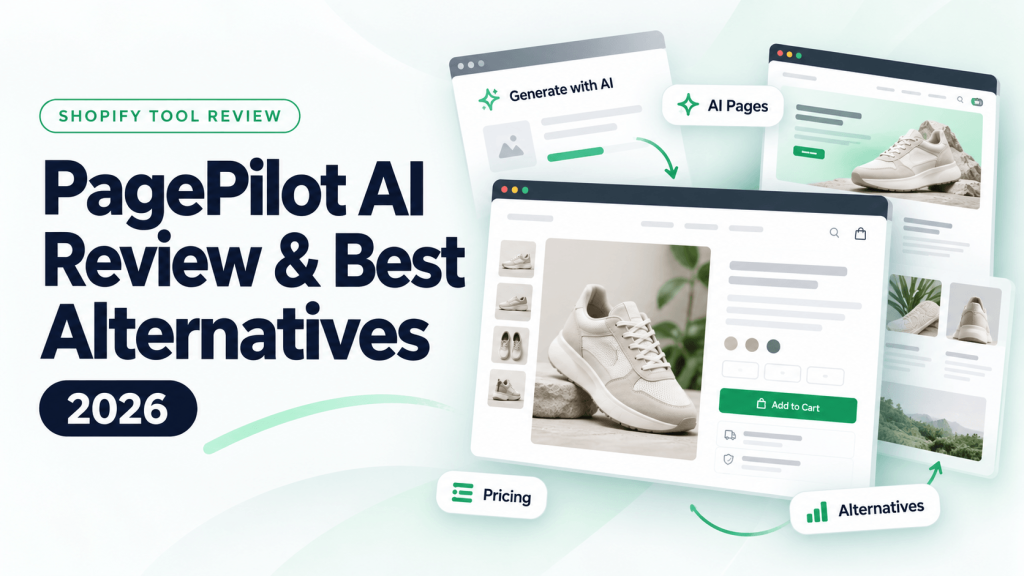
Can PagePilot AI help you launch better product pages faster?
This review examines PagePilot AI's current features, pricing, strengths and limitations, then compares the best alternatives for different Shopify workflows.
Disclosure: Some links in this article may be affiliate links. If you purchase through one of them, we may earn a commission at no extra cost to you. That does not change how we compare the tools. Features and prices can change, so confirm the current offer before subscribing.
8.4
PagePilot AI is a strong fit for Shopify sellers who need to turn supplier or competitor product links into editable product pages quickly. Its main value is speed: it combines AI-generated copy, images, templates, product research and Shopify publishing in one workflow. It is less suitable if you need complete control over every store page, a platform outside Shopify, or a full business setup that includes products, fulfilment and operations.
Building a Shopify product page is rarely difficult because of one individual task. The time disappears across product research, supplier imports, image cleanup, benefit-focused copy, mobile layout, trust elements and repeated edits. PagePilot AI tries to compress those steps into a faster workflow built specifically for ecommerce sellers.
The important question is not whether AI can produce a page. It can. The real question is whether the generated page gives you a useful starting point, remains editable and fits the way you test products. This PagePilot AI review focuses on those practical decisions rather than treating AI-generated copy as a shortcut to guaranteed sales.
What is PagePilot AI?
PagePilot AI is a Shopify-focused product-page and landing-page builder. According to its official product information, you can provide a product URL from sources such as AliExpress, Amazon, Shopify or Shein. The system then generates an editable product page containing copy, imagery and a structured layout.
It is primarily designed for dropshippers, product testers and ecommerce teams that publish new offers regularly. The tool also includes a template builder, editable cart drawer, upsells, product research, AI product images, advertising copy and support for more than 30 languages.
Important: PagePilot can speed up page production, but it does not replace product validation, supplier checks, accurate shipping information, legal policies or conversion testing. Review every generated claim before publishing it.
How PagePilot AI works
- Add a product source. Paste a supported product URL or begin from a product inside the platform's research tools.
- Generate the first draft. PagePilot builds page copy, selects a layout and prepares product imagery based on the available source information.
- Edit before publishing. Adjust the headline, benefits, price, variants, media, sections, cart settings and visual style. This review step matters because supplier content can be incomplete or inaccurate.
- Publish to Shopify. Connect a Shopify store and send the completed page to it. Publishing is reserved for a paid plan, while the free option is mainly useful for exploring the workflow.
This process is useful when speed is the main constraint. Instead of starting from a blank product template, the seller begins with a structured draft and spends time improving it. The result still needs human judgment, especially for claims, sizing, shipping, guarantees and brand voice.
Key PagePilot AI features
AI product-page generation
Generate a product page from an existing ecommerce URL. This reduces repetitive setup when testing several products, but the imported facts should always be checked against the actual supplier.
Templates and editable sections
PagePilot includes ecommerce templates, conversion-oriented blocks and a page builder. Sellers can change the generated structure instead of accepting a fixed AI result.
AI images and advertising copy
The platform can generate or edit product visuals and prepare copy for advertising. These assets can accelerate creative testing, although they still need brand and policy review.
Cart, upsell and bundle tools
Paid functionality includes a customizable cart drawer, cart upsells, bundles and volume discounts. This makes PagePilot broader than a simple product-description generator.
Product research
The Research area surfaces product ideas and supporting information. Treat these as research leads, not proof that a product will be profitable in your market.
Shopify publishing
PagePilot is designed around Shopify. Existing themes remain important because generated pages must still work with the store's navigation, apps, checkout and overall customer journey.
PagePilot AI pricing in 2026
The Shopify App Store listed the following plans when this article was checked on October 17, 2026. PagePilot can change pricing or limits, so verify the live listing before purchasing.
| Plan | Listed price | Main limits and features | Best for |
|---|---|---|---|
| Free | $0 | Limited pages, images and ad copy; explore templates and builder; cannot publish products to a Shopify store | Testing the interface before subscribing |
| Lite | $39/month or $390/year | 10 AI product pages monthly, 50 AI images, research tools, premium templates and Shopify publishing | Solo sellers testing a smaller number of products |
| Scaler | $59/month or $590/year | Unlimited AI product pages and images, product photoshoots, bundles, volume discounts and advanced support options | Stores and teams producing pages frequently |
The subscription is only one part of the operating cost. You may still pay for Shopify, a domain, fulfilment software, advertising, email tools and other apps. Compare the time saved against your complete monthly stack, not against a page-builder fee in isolation.
PagePilot AI pros and cons
Pros
- Fast starting point for Shopify product pages
- AI copy, images and page structure in one workflow
- Useful for frequent product testing
- Editable templates instead of locked output
- Built-in cart, upsell and bundle features
- Free option for evaluating the builder
Cons
- Publishing requires a paid plan
- Focused on Shopify rather than multiple platforms
- Generated copy and claims require manual verification
- Templates may need work to feel unique to a brand
- Does not replace sourcing, fulfilment or advertising strategy
- Extra app costs can increase the complete store budget
Best PagePilot AI alternatives in 2026
No single alternative is best for every seller. PagePilot is strongest when the goal is rapid product-page production. The alternatives below solve different parts of the store-building process.
1. BuildYourStore: best for a guided full-store starting point
BuildYourStore positions itself as a free AI-built Shopify store service. Its official information says the package can include a theme, starter products, ready-to-sell pages and a .store domain. The resulting store still requires a Shopify plan, and merchants remain responsible for evaluating products, suppliers and ongoing operating costs.
Choose BuildYourStore when your main obstacle is assembling an initial store. Choose PagePilot when you already have a store and want to produce or test individual product pages more quickly.
2. Shopify AI Store Builder: best native starting point
Shopify's own AI Store Builder generates personalized store designs from a short business description. It is a sensible option for sellers who want to remain inside Shopify's native ecosystem and begin with theme concepts rather than a third-party product-page workflow.
Its purpose is broader store design. PagePilot is more specialized around importing product information, generating selling content and publishing conversion-focused pages.
3. GemPages: best for flexible visual page building
GemPages is a visual Shopify page and funnel builder with templates, ecommerce components and AI-assisted image-to-layout functionality. It is better suited to merchants who want deeper drag-and-drop control across campaigns and landing pages.
The trade-off is setup effort. PagePilot aims to generate a first product page quickly, while GemPages gives the user more direct responsibility for design and layout decisions.
4. EComposer: best budget-friendly general page builder
EComposer supports landing pages, homepages, product pages, collections, blog pages and reusable sections. It offers a free plan and broader site-building coverage than a product-import tool.
It is a good option when you need one builder for multiple page types. PagePilot remains more focused on dropshipping product research, imports and rapid product-page creation.
5. Replo: best for design teams and advanced landing pages
Replo is aimed at teams that need high-control Shopify landing pages, templates and collaboration. It fits established brands and agencies that care about custom creative execution and testing workflows.
For a new seller who mainly wants to launch product tests, Replo may provide more design power than necessary. PagePilot offers a narrower and faster path for that use case.
PagePilot AI alternatives comparison
| Tool | Best use | Primary strength | Main consideration |
|---|---|---|---|
| PagePilot AI | Rapid Shopify product-page testing | Generates copy, images and page structure from product sources | Paid plan needed to publish |
| BuildYourStore | Launching a starter dropshipping store | Full-store starting package | Shopify and operating expenses still apply |
| Shopify AI Store Builder | Native Shopify store design | AI-generated theme concepts inside the Shopify ecosystem | Not a specialized product-import workflow |
| GemPages | Visual landing pages and funnels | Flexible drag-and-drop design | More manual design decisions |
| EComposer | Multiple Shopify page types | Broad page coverage and free entry plan | Less focused on automated product imports |
| Replo | Advanced brand and agency design | High-control creative workflows | May be excessive for basic product tests |
Who should use PagePilot AI?
PagePilot is worth considering if you:
- Already use Shopify and regularly test new products.
- Want a structured first draft instead of building each page manually.
- Need AI images, ad copy and product research in the same workflow.
- Are willing to review every generated claim before publication.
Consider another option if you:
- Need a complete store rather than individual product pages.
- Sell outside Shopify or need platform-independent pages.
- Want complete creative control for a mature brand design system.
- Expect software alone to select products, run ads and guarantee conversions.
Frequently asked questions
Is PagePilot AI free?
PagePilot offers a free plan with limited generation capabilities. According to its Shopify App Store listing, the free plan does not allow publishing products to a Shopify store. Paid publishing plans start at the listed Lite price.
How much does PagePilot AI cost?
When checked on October 17, 2026, the Shopify App Store listed a $39 monthly Lite plan and a $59 monthly Scaler plan, with discounted annual billing. Always confirm the live listing because pricing and limits can change.
Can PagePilot build a complete Shopify store?
PagePilot promotes both product-page generation and a separate free StorePilot experience. Its core paid app remains strongest as a Shopify product-page workflow. Compare the exact store package and ongoing requirements before treating it as a complete business setup.
Does PagePilot guarantee higher conversions?
No tool can guarantee conversions. Results depend on the offer, product-market fit, traffic quality, pricing, shipping, trust, creative quality and the final page. AI can speed up production, but testing determines performance.
Can I keep my pages after cancelling?
PagePilot's official FAQ says previously created and imported pages remain live after cancellation. It also says editing those pages through the Shopify customizer becomes unavailable once the subscription is inactive. Confirm this policy before cancelling.
Is PagePilot only for dropshipping?
Its import and research workflow is strongly aligned with dropshipping, but Shopify merchants can also use the templates, AI content and ecommerce sections for other product-page workflows.
What is the best PagePilot alternative?
BuildYourStore is useful for a guided full-store starting point, Shopify AI Store Builder for native store designs, GemPages or EComposer for broader visual page building, and Replo for advanced brand or agency workflows.
Should beginners use PagePilot AI?
Beginners may benefit from the structured workflow, but they should not publish generated content without reviewing product claims, shipping details, policies and supplier information. Start with the free plan and judge the editing workflow before paying.
Final verdict: is PagePilot AI worth it?
PagePilot AI is worth considering when page-production speed is a real bottleneck. It brings together product imports, AI copy, images, ecommerce templates, research and Shopify publishing. That combination can reduce repetitive setup for sellers testing several products.
Its limitations are equally important. A generated page is a starting point, not finished strategy. You still need to validate the product, confirm every claim, understand fulfilment, calculate total costs and test the final customer experience. Sellers who need a whole store may prefer BuildYourStore or Shopify's native AI tools. Teams that prioritize custom design may be better served by GemPages, EComposer or Replo.
The safest decision is to test PagePilot's free workflow with a real product, measure how much editing it requires and compare that time with your current process. Upgrade only when the saved production time justifies the recurring cost.
Want a faster starting point for your Shopify store?
Compare the available store-building options, confirm the ongoing costs and choose the workflow that matches what you actually need to launch.
Explore BuildYourStore